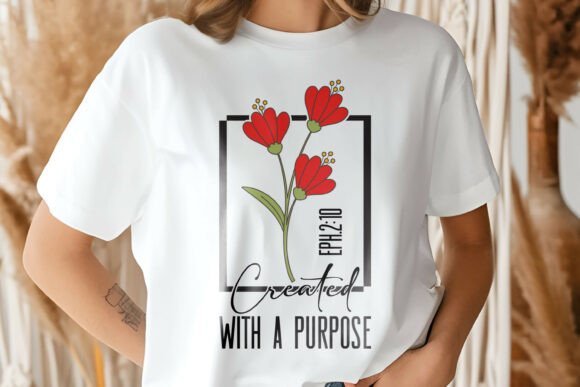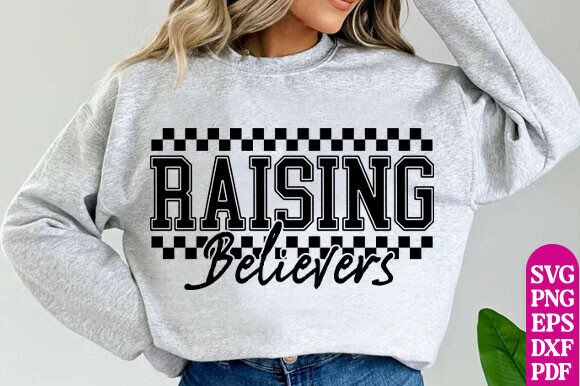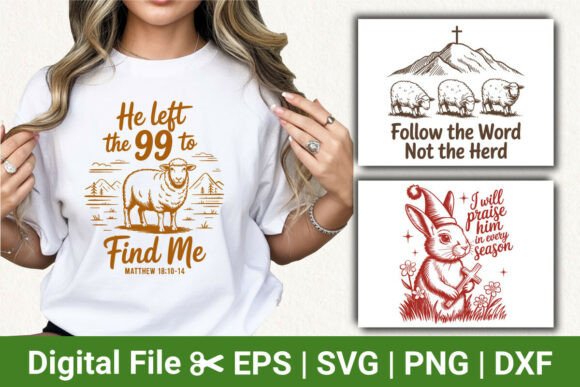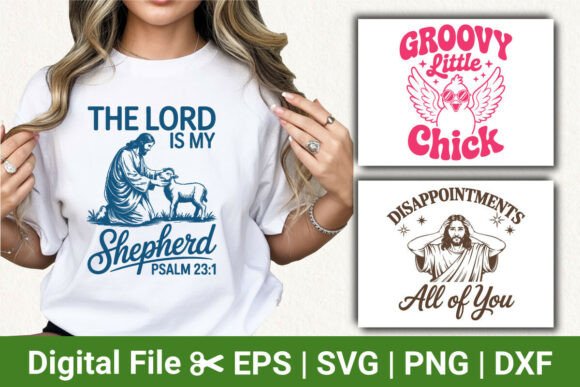
Christian Faith Shirt Design
A Quiet Strength That Stitches Well
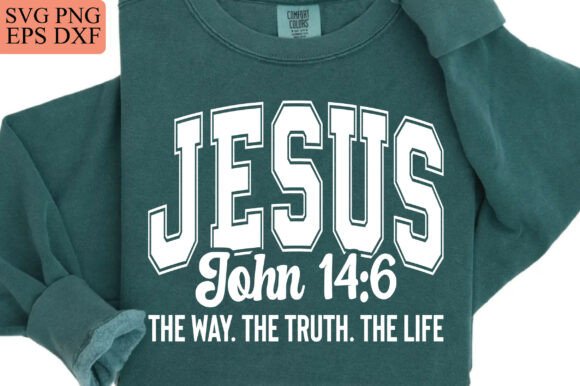
When I first opened the Christian Faith Shirt Design, I didn’t see a generic religious motif—I saw something with quiet intention. It’s not overly ornate, nor is it minimal to the point of vagueness. The layout balances positive space and thoughtful line work: a central cross flanked by subtle wheat or olive branches (depending on the version), with clean, legible lettering that reads “Faith” in a gentle serif—not too bold, not too fragile. It feels grounded, reverent without being stiff, and immediately made me think of a linen tea towel for a church kitchen boutique or a soft cotton baby onesie for a baptism gift.
Where This Design Finds Its Truest Voice
I recently used the Christian Faith Shirt Design as the centerpiece for a custom embroidered canvas tote—intended for a small faith-based nonprofit’s volunteer welcome kits. On that medium, it shone: the balanced proportions filled the 4×4 hoop comfortably, the satin-stitched cross held crisp definition, and the fill-stitch foliage added texture without overwhelming the fabric. It worked just as well on a lightweight sweatshirt for a youth group retreat—no puckering, no thread breakage, even across the shoulder seam where tension can shift.
This design naturally fits personalized gifts and small shop products where sincerity matters more than flash: nursery decor (pillow covers, framed wall hangings), aprons for ministry bake sales, holiday embroidery on kitchen towels, and even subtle patches sewn onto denim jackets for teen Bible study groups. As a machine embroidery design, it respects the limits of home and small-batch commercial embroidery—no micro-details that vanish at 3x scale, no overlapping satin columns that trap thread, and no dense fill areas that cause stabilizer show-through on light fabrics.
Fabrics & Surfaces: Where to Lean In—and Where to Pause
The Christian Faith Shirt Design performs reliably on stable, medium-weight fabrics: midweight cotton tees, twill tote bags, brushed poly-cotton sweatshirts, and quilting cotton for pillow covers. It handles dark fabric beautifully—just match thread colors thoughtfully (navy or charcoal gray for the cross, warm gold or cream for text). On thin or stretchy fabric? Use a tear-away + cut-away hybrid stabilizer, and consider simplifying the outer branch elements if stitching on ribbed knit baby onesies—you’ll preserve clarity without sacrificing meaning.
It’s less ideal for curved surfaces like structured caps unless resized carefully—the lettering and cross proportions don’t adapt gracefully to tight front panels. And while it works on textured fabrics like terry cloth towels, avoid placing it over heavy loops; opt for smoother sections near the hem or corner. Tiny hoops (under 3.5") will compress detail, especially in the lettering—test first. If you’re planning an embroidered patch, confirm whether the file includes an outline layer for clean edge cutting.
What Customers Actually Notice (and Why It Matters)
Here’s what I’ve observed across real orders: buyers respond to how honest the finished product looks—not perfect, but intentional. A customer who ordered this as sweatshirt embroidery for her daughter’s confirmation told me, “It didn’t look mass-produced. It looked like someone chose it *for her*.” That’s the value of restraint in a Christian-themed design. No glitter, no cartoonish flourishes—just clear form, balanced weight, and readable symbolism. That builds trust, especially for handmade product sellers on Etsy or at craft fairs. It also supports brand consistency for boutiques that curate quiet, quality-driven collections.
Visually, it avoids visual fatigue. Unlike some T-Shirt Designs that rely on high-contrast outlines or aggressive kerning, this one breathes. That makes it highly giftable—especially for milestone moments (baptisms, graduations, weddings) where sentiment outweighs trend. And because the stitch density stays moderate, the finished product holds up through repeated washing without cracking or fraying at the edges.
Practical Designer Notes Before You Stitch
- Always test the Christian Faith Shirt Design on scrap fabric matching your final project’s weight and stretch—especially if using it for baby embroidery or holiday embroidery on delicate items.
- Check thread color contrast on both light and dark backgrounds. A single mockup isn’t enough—try black-and-white previews too, to assess readability without color bias.
- Review stitch density in your embroidery software. If fill areas feel heavy on lightweight fabric, reduce density by 5–8%—it rarely sacrifices impact.
- Confirm hoop size compatibility. Most versions fit standard 4×4 hoops, but verify before hooping expensive garments.
- Inspect small details at 200% zoom: are the inner corners of the cross sharp? Does the “a” in “Faith” retain its counter? If not, adjust underlay or slow stitch speed.
- Use appropriate stabilizer—cut-away for knits, tear-away for stable wovens, and fusible + tear-away for lightweight linens.
- If selling finished items commercially, confirm licensing terms. Some digital embroidery files allow unlimited physical use but restrict resale of the digital file itself.
- For printable mockups or digital product previews, pair this design with muted, natural backdrops—cream linen, oatmeal cotton, or soft sage green—to reinforce its calm, handmade presentation.
Not Just Another Religious Motif—A Thoughtful Tool
The Christian Faith Shirt Design doesn’t shout. It invites. That makes it unusually versatile for creative entrepreneurs who value authenticity over algorithm-chasing. Whether you’re an Etsy seller building a cohesive collection of faith-based craft business assets, a small shop owner sourcing small-batch merchandise, or a hobbyist making personalized gifts for people you love—it stitches true, reads clearly, and carries weight without heaviness. It’s the kind of embroidery file that earns repeat use, not just one-off novelty. And in a market full of rushed, over-digitized designs, that’s rare. Respect the simplicity. Test it thoughtfully. Then let it speak—for you, and for your customers.